Eating Pleasure In Suburban Melbourne - Maling Road

By graham | July 18, 2010

Most large cities have streets or districts which are known for their shops and cafes. In Melbourne such eating zones include Lygon St Carlton, Brunswick St Fitzroy, and Acland St in St Kilda. But there are other gems hiding out in the suburbs, and I stumbled across a good one last month.

The area is the shopping precinct of Maling Road in Canterbury, an inner eastern suburb of Melbourne. It’s a great little area for cafes, gourmet foods and quality coffee … and there are some interesting shops too.

I found the area because I’m a coffee enthusiast. One of the most revered coffee houses in Melbourne (according to the CoffeeSnobs website) is the Maling Room cafe in Canterbury, so when passing through Melbourne I made the short train trip out of the city to try it out.

The Maling Room proved worthy of its reputation, with coffee worth travelling for. Their food was good too, and being located inside a historic post office building added to its charm. But when I stepped outside to explore the street I realised my discoveries had only begun.

A few doors down was Browns: Bakers of Distinction - and I was lured inside by a range of bakery goodies that made me drool. Their offerings can be eaten, with coffee, in their cafe area … and so I did.

With bits of a roast pumpkin and fetta muffin still lurking in my mouth, I was drawn into another small shop named Xocolatl - specialising in unique hand-made chocolates … and coffee. Of course I had to try some. Magnificent, and not surprisingly it was very well patronised by the locals.

Then I noticed, across the road, Bambaleros Freshly Roasted Coffee. This cafe roasts its own beans in a roaster positioned proudly at the back of the small premises. Being a Coffeesnobs member, I had to try some, and it was good. So was their food.

Next I looked inside Weatherson Foods, another small shop (they’re all small) specialising in “ready made meals and finger food to take home”. It too had a small cafe section for dining in. I would have snaffled one of their delicious looking creations for lunch later, had I not already acquired sufficient lunch from Browns.

Cornelius cheese, wine and coffee also competed for my gastronomic attention, but for some reason I was no longer hungry. Likewise I reluctantly passed by Wilson & Walsh gourmet deli and eatery, which also functioned as a cafe. I’m saving them for my next visit.

It’s not all cafes and gourmet food - sweet tooths are catered for at A Pocket Of Lollies. This is an old fashioned lolly shop (known elsewhere as a candy store) packed with a vast array of sweet delights. Shops like it are rare these days.

Sweetness could also be found at Bohemia Cakes, a cafe describing itself as “a taste of Europe”. There were several other attractive cafes I didn’t venture into. Sorry Cafe Eden, Cafe 88 and Ruby T - even a coffee snob can only drink so much caffeine in one morning.

Still on a food theme, Maling Road also has two small fruit shops selling fruit and veges which looked fresh, and some out of the ordinary food items. They are reminiscent of the days before supermarkets came to dominate, when people relied upon a variety of small specialty shops like these in their local main street.

Other Maling Road shops sell gifts, antiques, boutique clothing,fine art, china & crystal, books, beauty therapy, and interior design. Of course there are more everyday shops too, like the pharmacy, post office, hair salons and grocery shop.

Notable by their absence were multinationals and big chain stores. Apart from IGA and Bakers Delight (both Australian and locally owned) and Browns (11 bakeries across Melbourne), all the shops and eateries in Maling Road are independant one-offs. This makes the area refreshingly different from the uniformity of the average shopping centre.

Apart from filling my belly and reassuring me that unique independant shops can still thrive, my visit to Maling Road illustrated something travel has taught me - suburbs aren’t necessarily boring. The local business association describes Maling Road as a “charming shopping village” with a “special ambiance” - and I think they’re right.

By all means visit the well known eating areas - they’re usually well known for good reason. But don’t be afraid to venture into suburbs you might not have heard of - you just don’t know what goodies you may find there.

More information:

Maling Road Business Association - all about the shopping area, including a store directory and map.

The Maling Road shops start at the intersection of Canterbury Road - right next to Canterbury train station. This station is 15 or 20 minutes east of Flinders St in the city, within zone 1, and all Lilydale and Belgrave trains stop there.

Topics: Attractions, Victoria | Add Your Comment »


Staying At The Beach In Golden Bay

By graham | June 24, 2010

Last time I visited New Zealand, I checked out the Golden Bay region in the south island’s north. As is my habit, I sought somewhere to stay that was out of town and scenic, yet still convenient … and I found it at Pohara Beach.

Although I want this website to focus on places, rather than places to stay, I can’t help mentioning some of the accommodation I’ve stayed in which stand out for some reason. One of these is the Pohara Beach holiday park. It sits in a rural setting 10 km from Golden Bay’s main town of Takaka, but, as its name suggests, it also sits right alongside a beach. A rather nice one too.

Staying at a beach might not be the first thing you associate with New Zealand’s south island, especially in winter. Golden Bay, however, is at the mildest part of the south island, and its waters are sheltered. After weeks of cold and frost further south, and the dampness of the west coast, strolling on Pohara’s golden brown sand felt balmy in comparison. It demonstrated once again what a land of contrasts New Zealand is. Yes, that’s a cliche, but it’s true - you can have snowcapped mountains in the morning, sand and surf in the afternoon.

I enjoyed the soothing sound of waves rolling onto the beach, something able to be enjoyed from inside the accommodation since it is so close to the sea. Because I indulged myself by staying in a small cabin, I even had a view of the sea out my window. Not all accommodation options have the view, but the ocean-side ambience is still there.

The Pohara Beach holiday park is part of the Top Ten chain, and shares the high standard of facilities common to parks in this chain. The amenities were as good and clean as any I’ve found in caravan parks. Prices are also high by caravan park standards, but then you usually get what you pay for.

My stay in a cabin didn’t quite fit “budget” category, even with winter rates, but for a short stay I felt it was worth it for the location. Exploring the Golden Bay area required a local base somewhere, and finding one so comfortable and right on a pleasant beach made it special.

More information:
Pohara Beach holiday park website

Topics: Accommodation, New Zealand (south) | Add Your Comment »


Pupu Springs

By graham | June 16, 2010

Places with interesting names usually draw my attention, so when I came across a sign for Pupu Springs I just had to have a look. Despite the unsanitory sounding name, it turned out to be a place of purity and beauty.

The real name is Te Waikoropupu Springs, so it’s not surprising it gets abbreviated to Pupu. You’ll find it in the northwest corner of New Zealand’s south island, in a region referred to as Golden Bay. The springs (in the Te Waikoropupu Springs Scenic Reserve) are a short drive off the main road, not far to the west of the area’s main town of Takaka. If you’re exploring the area, you don’t need to detour much.

What you’ll find is a pleasant nature reserve containing native trees, bubbling creeks, and what some claim is the purest spring water in the world. I’m not sure how true that is - I’ve seen grand claims for water purity elsewhere - but when you look at it, the Pupu water is indeed remarkably crystal clear. I thought I’d seen clean creek water before, but this was in a higher class.

The great thing about the reserve at Pupu Springs - well, I liked it - is the way you can appreciate it by wandering around the gentle walk trails. The walk alone would have been good enough, but the incredibly pure spring water gurgling among the pure and natural-looking landscape made it delightful. Definitely a short sightseeing stop I didn’t regret.

More information:
Te Waikoropupu Springs (NZ Dept of Conservation)

Topics: Attractions, New Zealand (south) | Add Your Comment »


A Great Kiwi Country Pub In Omakau

By graham | June 6, 2010

I’ve written before about the Maniototo region of New Zealand - sparsely settled and sparsely visited high plains inland from Dunedin. When exploring this unique part of New Zealand’s south it’s good to stay somewhere local, and so I thought I’d mention one of the places I stayed, which I liked.

Omakau is not a well known town. However anyone who travels between Queenstown and Dunedin passes through Alexandra … and Omakau is just 26km away. It’s up the less frequented “high road” which runs from Alexandra via the Maniototo region towards the coast.

The Commercial Hotel in Omakau is a fairly typical rural pub which takes central place on the main road at the town centre. Well, it’s nicer and more charming than some pubs, but it remains unpretentious and not too fancy. It’s popular with the locals of this small and quiet town … which is also unpretentious and not fancy. Apart from being on the Otago Central Rail Trail, Omakau has been little impacted by New Zealand’s tourism boom.

A comfortable private room at a reasonable price was what drew me to the Omakau Commercial Hotel, and I wasn’t disappointed. My room was as clean and well appointed as I’d hoped, the bed was comfortable, and the other rooms I peeked into also looked inviting.

On entering the bar - where the accommodation booking is done - I felt conspicuous. It reminded me of western movie scenes where the stranger enters the saloon and all the regulars turn around and go quiet. One of the realities of towns with few tourists is that visitors tend to stand out. However, unlike the westerns, there was no gunfight; instead the local drinkers responded with smiles, friendly nods, and an invitation to join in whatever game they had going on at the time.

Later, after settling in, a five minute drive took me to the crest of the nearby Raggedy Range for an excellent sunset viewing. It may not be a lofty range, but the view is expansive, and reveals just how mountainous and unpopulated this part of New Zealand is.

Back in town, eating was the next priority. Some fellow diners told me that the hotel has a reputation for good food, and while it’s hard to judge from one overnight stay, the dinner and hearty cooked breakfast I enjoyed were superb. I had my own budget food supply in the car, but felt no guilt about leaving it there!

If I’m blessed enough to return to the Central Otago region of New Zealand, I hope to once again enjoy the rural hospitality of Omakau and its pub. Also to see how the refurbishments are going … and sample some more of their menu.

More information:
Omakau Commercial Hotel website

Topics: Accommodation, New Zealand (south) | Add Your Comment »


Mulka’s Cave

By graham | May 21, 2010

Not long ago I was passing by Wave Rock, one of Western Australia’s well known attractions, and so I dropped in for a look. But the famous rock wasn’t the highlight of that day for me: instead it was a less-visited site not far away, known as Mulka’s Cave.

Most tourist literature on Wave Rock mentions other things to visit in the area, and one of these is Mulka’s Cave. Tour buses do stop there, however Wave Rock gets nearly all the attention, leaving Mulka’s Cave relatively overshadowed. If you’ve driven all the way to Wave Rock - and it’s a long way from anywhere - it’s a pity not to go a little further and see something unique.

Mulka’s Cave is about 18km beyond Wave Rock, near Hyden in Western Australia’s wheatbelt. Much of the road there is sealed, and the last gravel section is good. What you find at the end of it is a low hill of granite with a small cave at its base - looking a little like the mouth of a whale shark.

Entering the cave involves just a short walk along a flat path, then up a gentle ramp to a platform. There’s no fee - you just turn up and go in. The cave isn’t large, and doesn’t have stalactites (it’s granite), but if you look closely at the walls and ceiling you’ll see what makes this little nook different - an assortment of ancient Aboriginal cave paintings.

At first there doesn’t appear to be much to see, but once your eyes grow accustomed to the low light, images become clearer. There are hand stencils, plus depictions of the animals used as food in this area. Some are hard to spot and may require some manouvering up the sloping floor in order to better see out-of-the-way parts of the ceiling. The harder you look for the markings, the more you see.

The art in Mulka’s Cave is believed to be around 3000 years old according to a WA museum report I read. On the other hand, another internet source claimed 30000 years, and the Aborigines would have been around back then. In any case, the cave paintings are very old. They are also associated with the legend of Mulka, an ancient character whose story you can read all about at the cave.

There are also some pleasant walks from the car park, which complement the cave and make a visit even more worthwhile. My legs definitely appreciated a walk after a long drive.

A short loop trail passes through a range of local vegetation, and reveals fine examples of a gnamma hole and a lizard trap used by Aboriginals in millenia past. The gnamma hole is a rock waterhole which retains water long after rain, and the lizard trap in this case is simply a slab of granite propped up on stones. They may be basic, but features like these helped the Aboriginals thrive, and there are information signs to fill you in on the details.

So if you’re visiting Wave Rock, I can recommend going a little further to Mulka’s Cave. You won’t just see ancient paintings - you’ll get an interesting glimpse into a culture that was around long before any Romans thought of starting an empire.

Topics: Attractions, Western Australia | Add Your Comment »


Australia’s Unappreciated Wonders

By graham | May 5, 2010

There’s a lot to like about Australia. One aspect which endears me to this land down under is the overlooked and understated nature of so many of its great wonders. You can stumble across features which are worthy of world acclaim, yet remain unknown to most of the world.

To illustrate what I mean, here is a quote from travel writer Bill Bryson. He is referring to the rare tingle and giant karri forests of Western Australia - the 3rd tallest species of trees in the world - and marvelling at how unknown they are:

It struck me in a moment’s idle thinking that this forest was quite an apt metaphor for Australia. It was to the arboreal world what Charles Kingsford Smith was to aviation or the Aborigines were to prehistory - unaccountably overlooked.
It seemed amazing to me, in any case, that there could exist in this one confined area some of the rarest and mightiest broad-leafed trees on earth, forming a forest of consummate and singular beauty, and hardly anyone outside Australia has even heard of them. But that is the thing about Australia, of course - that it is packed with unappreciated wonders.

- from Chapter 18 of “Down Under” by Bill Bryson (also published as “In a Sunburned Country”)

Indeed! Most of the world has been taught about the world’s tallest trees being the redwoods of California. But how many know that the 2nd and 3rd tallest tree types - almost as tall as the redwoods - are both found in Australia? Not even all Australians are aware of that.

Karri trees towering over my car (bottom right)

Karri trees towering over my car (bottom right)

An advantage of having treasures which are little-known elsewhere is that we get to enjoy them in a more natural and intimate way. No fuss or fanfare, and mostly unspoiled by crowds - they are just there. The “forest of consummate and singular beauty” which so impressed Bill Bryson has some trees taller than most on the planet, but you won’t find them fenced off or signposted. They grow quietly and modestly, just as they’ve done for centuries, and to me that makes coming across them all the more enjoyable.

Bryson also mentions the Australian Aborigines as being unaccountably overlooked, and he has a point. When we think of ancient cultures, most people would think of the Incas, or the Greek, Roman or Egyptian empires, or perhaps even the Neanderthals. Not so many are aware that the oldest surviving culture on earth belongs to the Australian Aborigines.

Yes, our Indigenous people have been here for at least 50000, probably 60000 years - long before Europe or the Americas saw a human footprint. What’s more, their culture still exists today … a miracle of survival, really, but how many outside Australia know of them?

“Unaccountably overlooked” is an apt description. You can visit a well known tourist attraction like Wave Rock and be unaware that just down the road, but with a fraction of the visitors, lie rock paintings thousands of years old. They make the Aztecs look modern, yet most people don’t know they’re there.

You can wander around the Burrup Peninsula expecting only scenery, and find yourself surrounded by the largest collection of ancient rock carvings in the world. Then there is the spectacular Bungle Bungle range (Purnululu National Park), which remained somehow un-noticed by non-Aboriginals until as recently as 1983.

You just never know in Australia when you’re going to stumble across something noteworthy but surprisingly little known - the biggest, oldest, first, longest, wildest, or whatever. It makes travelling here a real journey of discovery. What you find is so often different from, and better than, what you were expecting. That’s one of the things I love about my home country.

Reference:
In a Sunburned Country by Bill Bryson
(also published under the title “Down Under”)

Topics: Odds and Ends | Add Your Comment »


Reasons To Stay In Richmond, Tasmania

By graham | April 26, 2010

The small town of Richmond, near Hobart in Tasmania, is best known for having the oldest bridge in Australla. Built by convicts in 1823 it is indeed a nice bridge, but there’s more to Richmond than that. For some it may even be a viable alternative to staying in Hobart.

The aspect which first struck me was that the whole town has historic charm, not just the bridge. Hobart was the first place settled by Europeans in Australia outside of Sydney, and towns like Richmond followed soon after. It has retained enough of its old buildings to keep a historic ambience, which complements its small-town appeal. In short, it has more character than your average Aussie town and is a pleasure to stroll around.

Another of Richmond’s assets is its bakery. Near the middle of town, the Richmond Bakery boasts a large range of yummy baked goods, with a cafe so you can dine in with a coffee. When I’ve been there the coffee was good (not quite excellent), but the food was wonderful. Suffice to say, the Richmond Bakery is one of my favourites in Tasmania. If you’re into bakery food, the bakery alone is reason to stop in Richmond.

Proximity to Hobart is another plus. You do get some weekend crowds from the city, but most of the time Richmond feels like a small country town. A range of hills forms a sort of barrier between Richmond and the sprawl of Hobart, whose centre is just 24km away. For anyone wanting to explore Hobart but preferring a quiet country base to return to, Richmond is a good solution if you have your own transport … particularly if you use caravan parks.

Hobart doesn’t have any centrally located caravan parks. If you’re staying in a campervan, caravan, or any of the other caravan park options, choices for Hobart are limited to the outer suburbs or fringes. In my opinion, if you’re going to have to commute, you may as well commute a little bit further and stay somewhere nicer than a suburb. I’ve stayed in a few caravan parks around Hobart, and liked the one at Richmond best. Not so much for the park itself, but the town it sits next to.

On my last Tasmanian trip, when I was driving a campervan, I enjoyed a stay at the Richmond caravan park. A very pleasant way to start the day was to walk the 10 or 15 minutes to the river. Then stroll along the river bank, near the historic bridge, soaking up the peace and stillness of a new day dawning. Then walk to the bakery for a nourishing (or otherwise) breakfast, followed by the return walk to the van, fortified for the day ahead. Exploring Hobart is then an easy drive over the hill.

Without your own transport, it makes sense to stay in the city when visiting Hobart. But with your own wheels Richmond can be a pleasant base - or, at the very least, a good walk and eat stop on the way to somewhere else.

More information:
Historic Richmond Village Tasmania

Topics: Accommodation, Tasmania | Add Your Comment »


Salmon Beach, WA

By graham | April 17, 2010

Rugged, pristine, scenic, isolated and deserted … If you like walking along beaches fitting that description, then you might like Salmon Beach. Just don’t expect to go for a swim there.

The Salmon Beach I’m referring to (there are probably others) is in the southwest corner of Western Australia, in the D’entrecasteau National Park. It’s just a few kilometres west of Windy Harbour, whose name provides a clue as to why swimming isn’t recommended. This part of the coast feels the full force of winds and swells sweeping up from the southern ocean, making the beaches a little windswept and rough for much of the time (but not all the time). Windy Harbour itself has sheltered swimming, but not Salmon Beach.

I found Salmon Beach when visiting the coastal cliffs at Windy Harbour. From this tiny hamlet of shacks and campsites, a nicely paved road winds up to the top of the spectacular cliffs nearby. The cliffs and dramatic coastal views are the main drawcard here, and provide good reasons to visit the area. A number of side roads branch off to lookouts, and one of the first you come to takes you the short distance to the Salmon Beach parking area.

A viewpoint just before the beach gives a preview of what you’ll find - unspoiled beach and cliffs, wild and untamed. If you visit outside of summer and holiday periods, you’ll probably have it all to yourself. If you don’t, it still won’t be crowded.

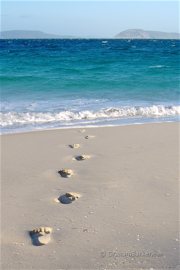
A short walk from the car park through dunes puts you on the beach. In one direction you see limestone cliffs rising sharply out of the sea, usually with waves smashing on the rocks at their base. In the other direction - a stretch of sand backed by high dunes, with more cliffs further on. What you won’t see is anything man-made, other than human visitors. The only developments on this beach are those brought about by erosion, climate and sea level changes.

So what can you do here? Salmon Beach isn’t somewhere you’d go to swim or sunbathe (although it’s possible if conditions are just right), but it’s a great place for beach walks. Also playing in the sand, or just chilling out watching waves crashing or storm clouds passing by. Beach fishing may be another option, but as a total non-fisher I’m not qualified to comment.

As someone who loves to relax and soak up the sounds, sights and smells of a wild beach, I do feel qualified to say that Salmon Beach is a great spot for that sort of passive nature appreciation. The sunsets can be delightfully moody too. And it’s somewhere that those with conventional vehicles can access the sort of unspoiled beach you’d often need a four wheel drive to get to.

Topics: Beaches, Western Australia | Add Your Comment »


« Previous Entries